Shopping Guides · 6 min read · Deal Shop Market buying desk
A pillow is the one purchase you spend a third of your life inside. Buy it carefully and you forget about it for years.
Ordering a pillow you have never pressed with your own hands feels like a gamble, and it is the one
purchase in the house you will spend roughly a third of your life resting on. The good news is that
the qualities that make a memory foam pillow work are all written down somewhere on the listing.
You simply have to know which lines to read.
Begin With How You Sleep
Sleeping position decides almost everything else. Side sleepers need height in order to bridge the gap
between shoulder and neck, or the spine bends sideways overnight. Back sleepers want moderate height
that supports the curve of the neck without tipping the chin forward. Stomach sleepers need the
shallowest, softest option available, because anything tall pushes the neck into an extended angle
that will announce itself the following morning.
If you turn during the night — and most people do — look for something with adjustable
height rather than a fixed mould, or accept that you are choosing which of your positions gets the
best support.
Solid or Shredded Fill
A solid memory foam pillow is one continuous moulded block, often contoured. It holds its shape all
night, which is exactly what a firm, unwavering support should do, and it is the usual choice for
anyone with persistent neck tension.
Shredded foam is exactly what it sounds like: thousands of small pieces inside a cover, which means you
can push filling to one end, reduce the loft, or add more until the pillow matches your shoulder
width. It feels plusher, sleeps cooler because air moves through the gaps, and is the more forgiving
buy when you are ordering blind.
Three lines to check before you add it to the basket
- Fill type — solid mould or adjustable shredded.
- Loft in inches — matched to your sleeping position.
- Certifications — CertiPUR-US for the foam, OEKO-TEX for the cover.
Check the Certifications, Not the Adjectives
Foam is a chemical product, and the words “premium” or “orthopaedic” on a
listing tell you nothing. Two standards do. CertiPUR-US covers the foam itself and limits what may be
present in it. OEKO-TEX Standard 100 covers the finished textile, including the cover that will sit
against your face for eight hours a night. If neither appears in the specification, keep scrolling.
A removable, machine-washable cover matters more than most shoppers expect. It is the part that
collects oils and dust, and the part that determines whether the pillow still looks presentable in a
year's time.
Sizes, Loft and the Trial Window
Loft is the measured height of the pillow and it is the number to compare, not the marketing name.
As a starting point: roughly three to four inches suits a stomach sleeper, four to five inches suits
a back sleeper, and five inches and upwards is where side sleepers usually begin. Match the pillow size
to your pillowcase rather than the other way round — a queen pillow in a standard case will
compress and lose the loft you paid for.
Because comfort is personal, the return terms are part of the specification. At Deal Shop Market you
have fourteen days from delivery to change your mind, which is long enough for three or four nights of
honest testing.
Bedding in this house
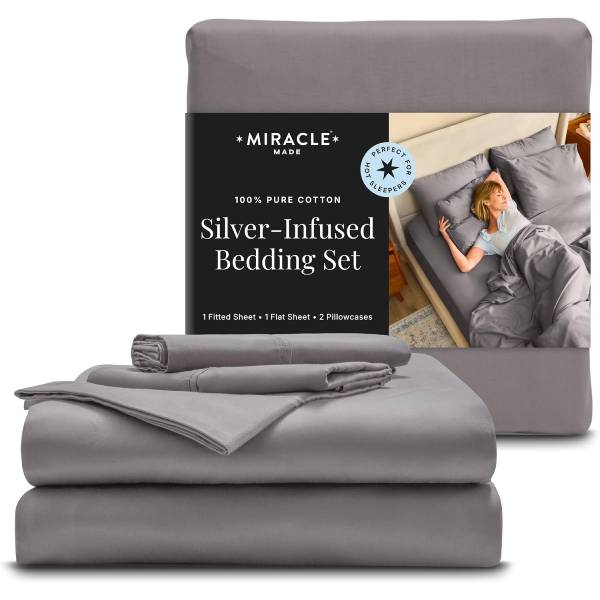
If you are refreshing the whole bed rather than the pillow alone, our Home Essentials department carries cooling cotton sheet sets and bathroom linens that pair well with a new pillow.
Looking After It
Wash the cover every few weeks, and air the foam core for a few hours rather than putting it through a
machine, which breaks down the cell structure. Most memory foam pillows give their best for around
eighteen months to two years, after which the foam stops springing back and starts sleeping warm. If
you find yourself punching it back into shape each morning, that is the signal.